Best CRM for Loan Agents and DSA Teams in India
Most loan agents don’t lose deals because a customer said no. They lose deals because nobody called back on time. A hot lead from a loan aggregator sits in a WhatsApp forward for two hours. An Excel sheet gets overwritten. A telecaller forgets which applicant still needs to submit salary slips. By the time someone follows up, the customer has already taken a loan from someone else.
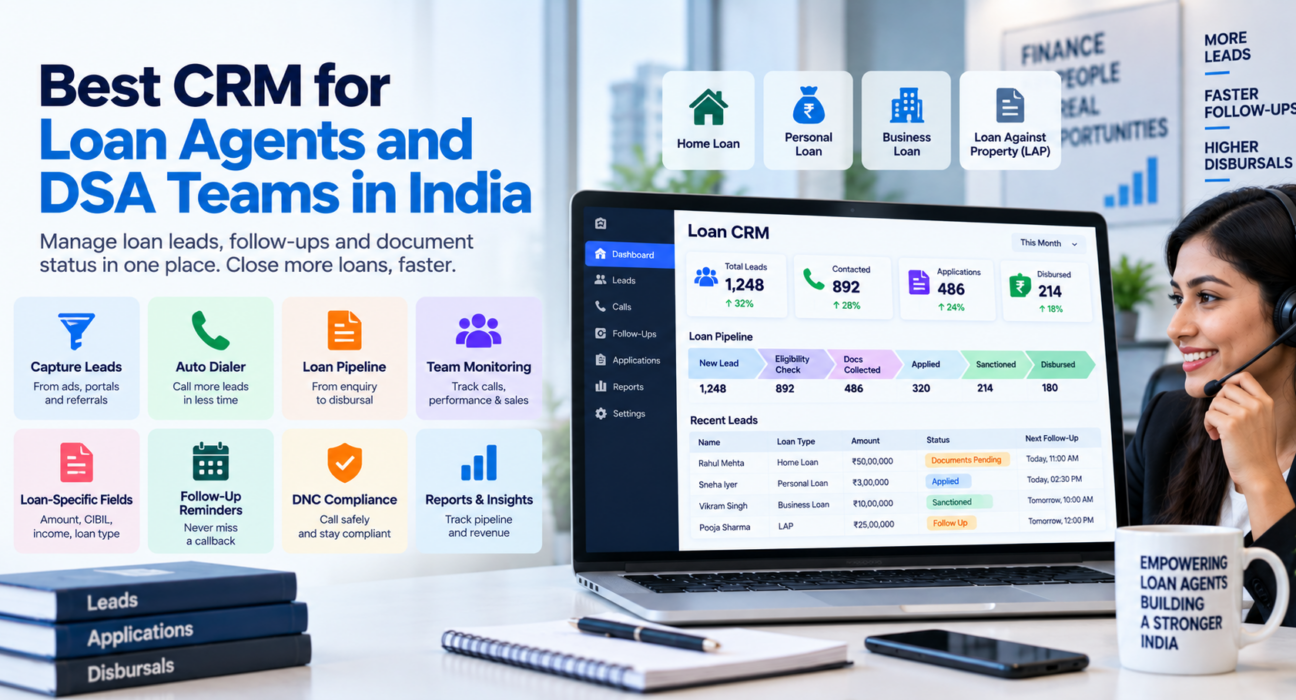
This is exactly the problem a good loan agent CRM solves. For DSA (Direct Selling Agent) teams and NBFC tele-sales desks, a purpose-built telecalling CRM for loan and DSA teams brings every enquiry, call and document status into one pipeline. So agents spend their time calling and closing, instead of hunting for the next lead.
In this guide, we’ll look at what a loan agent CRM actually needs to do, how it differs from a generic CRM, and how to choose one that fits how Indian DSA teams work.
What Is a Loan Agent CRM?
A loan agent CRM is software built specifically for people who sell loans over the phone — personal loans, home loans, business loans, or loan against property (LAP). It manages leads from the moment they arrive, whether from ads, portals, or referrals, all the way through eligibility checks, document collection, sanction and disbursal.
A generic sales CRM doesn’t do this well. A loan agent CRM does, because it tracks loan type, requested amount, income, CIBIL band and document status as core fields, not as an afterthought.
Why Loan Agents and DSA Teams Need a Different Kind of CRM
Loan sales in India works differently from selling a product or a subscription. A few things set it apart.
Leads Arrive From Many Places at Once
A single DSA or NBFC desk often gets enquiries from Facebook and Google ads, a loan aggregator website, walk-in referrals, and a branch’s own website form, sometimes all on the same day. Without a system to pull these together, agents end up checking five different places just to find out who to call next.
Every File Leaves a Paper Trail
A loan doesn’t close on one call. Instead, it moves through income verification, CIBIL checks, document collection and lender approval, with real gaps in between where a file can go cold. A CRM needs to track this movement, not just log a single “contacted” status.
Speed Decides Who Wins the Customer
Someone comparing loan offers usually talks to more than one DSA at the same time. So the agent who calls back first, with the right eligibility information ready, usually wins the file. Delay costs deals here more than in most other sales categories.
Compliance Isn’t Optional
DNC (Do Not Call) registry checks and call records matter for regulated lending. Basic hygiene, in other words, not an extra feature.
Because of all this, loan agents typically move to CRM software built around telecalling and lead follow-up, rather than adapting a spreadsheet or a basic contact manager.
What to Look For in a CRM for Loan Agents
When you compare CRM software for loan and DSA work, these capabilities matter most day to day.
1. Lead Capture From Multiple Sources
Your CRM should pull leads in automatically from ad platforms, loan portals, website forms and referral sources, then remove duplicates before an agent ever sees them. Manually copying leads from WhatsApp or email wastes time and creates errors.
2. Auto Dialer for Faster Follow-Up
An auto dialer queues the next lead automatically, so agents don’t dial numbers by hand one at a time. For a busy DSA desk handling dozens of daily enquiries, this alone can meaningfully increase how many leads get called on the same day they arrive.
3. A Pipeline Built Around Loan Stages
Look for a pipeline that reflects how a loan file actually moves: new lead, eligibility check, documents collected, logged/applied, sanctioned, disbursed, and rejected. A generic “won/lost” pipeline built for retail sales won’t capture this.
4. Fields for Loan-Specific Data
Agents should be able to log loan type, loan amount, monthly income, CIBIL band, employer and lead source directly on the call. That way, this information stays searchable and reportable later, instead of getting buried in call notes.
5. Follow-Up Reminders
Loan files often stall on pending documents. So the CRM needs reliable reminders and callback scheduling, otherwise “waiting on salary slip” can quietly turn into a lost file three weeks later.
6. Visibility Into Pipeline and Revenue
Sales managers need to see, at a glance, how much loan value sits in each stage, what’s been disbursed, and which agent or lead source converts best.
7. Team Monitoring for Accountability
For desks with multiple telecallers, live visibility into who’s on a call, who’s idle, and daily call and conversion numbers helps managers coach agents instead of guessing where the bottleneck is.
8. DNC Compliance
Automatic DNC list checks reduce the risk of calling numbers that shouldn’t be dialed. This matters more in regulated lending than in most other sales categories.
How This Plays Out for Different Teams
Independent DSA agents juggling personal, home, business and LAP leads benefit most from a pipeline that keeps each loan type visible separately. This way, eligibility checks for a business loan don’t get mixed up with a home loan file.
NBFC tele-sales teams running high lead volumes from paid ads benefit from an auto dialer that gets fresh leads called within minutes. After all, agents capture income and CIBIL details best while the conversation is still fresh.
Branch or team-based loan desks benefit from live team monitoring. As a result, a manager can see which agents are keeping up with call targets and which files are stuck waiting on documents.
These are illustrative examples of how different loan-selling setups tend to use CRM features, not case studies of specific customers.
Common Mistakes Loan Agents Make Without a Proper CRM
- Relying on spreadsheets or WhatsApp for lead tracking. Leads get duplicated, lost, or called twice, which frustrates customers.
- No system for chasing pending documents. Files stall for weeks because nobody has a clear reminder to follow up.
- Mixing all loan types into one generic pipeline. This makes it hard to see which loan product is actually converting.
- No visibility into agent performance. Without call and conversion data, managers can’t tell which agent needs coaching or which lead source deserves more ad spend.
- Skipping DNC checks. This creates compliance risk that basic automation can easily avoid.
How TeleCalling CRM Supports Loan Agents and DSA Teams
TeleCalling CRM includes a pipeline built for loan and DSA work out of the box: new lead, eligibility check, documents collected, logged/applied, sanctioned, disbursed, and rejected. It also captures loan type, loan amount, monthly income, CIBIL band and employer as lead fields.
The system pulls in leads from Facebook and Google Ads, website forms, referral partners and Google Sheets automatically, then deduplicates and assigns them to an agent. Meanwhile, the built-in auto dialer queues calls sequentially and skips DNC numbers, while follow-up reminders help agents chase pending documents instead of letting files go cold.
For managers, a live war room shows agent activity, talk time and today’s wins in real time. The pipeline view also shows open and won deal value by stage, which is useful for tracking how much loan value moves through the desk at any given moment.
This is one option among several available loan agent CRM tools in the Indian market. Ultimately, what matters most is choosing software that matches your team’s actual lead volume, loan products, and follow-up process.
Loan Agent CRM: Quick Comparison Checklist
| What to Check | Why It Matters |
|---|---|
| Multi-source lead capture | Avoids manual entry errors and lost leads |
| Auto dialer | Speeds up follow-up on fresh leads |
| Loan-specific pipeline stages | Matches how loan files actually move |
| CIBIL, income, loan type fields | Keeps eligibility data searchable |
| Follow-up reminders | Prevents document delays from killing a file |
| Team/agent reporting | Helps managers coach and allocate leads |
| DNC compliance | Reduces regulatory risk |
| Mobile app | Supports field agents and remote calling |
Frequently Asked Questions
What is the best CRM for loan agents in India?
There’s no single universal answer, since the right choice depends on team size, lead volume and loan products sold. Look for a CRM with a loan-specific pipeline, auto dialer, DNC compliance, and fields for loan amount, income and CIBIL band, then compare options against your actual workflow.
Do individual DSA agents need a CRM, or is it only for large teams?
Even a single DSA managing multiple loan types benefits from a CRM, mainly to avoid losing track of which leads are waiting on documents and which have already been contacted. The benefit scales with lead volume, but the core problem — leads going cold — affects solo agents too.
Can a loan agent CRM track different loan products separately?
Yes. A properly built loan agent CRM lets you tag leads by loan type (personal, home, business, LAP), so you can filter your pipeline and reports by product and see which category converts best.
Is an auto dialer necessary for loan sales?
Not strictly, but it removes the manual work of dialing numbers one by one. As a result, agents usually attempt more calls in the same working day, which matters most when a fresh lead needs a quick response.
How is a loan agent CRM different from a telecaller CRM used in other industries?
The core telecalling features — auto dialer, call logging, follow-up reminders — stay similar across industries. The real difference lies in the data fields and pipeline stages, which for loan agents need to reflect eligibility checks, document collection, sanction and disbursal, rather than a generic sales pipeline.
Does using a CRM guarantee more loan disbursals?
No CRM can guarantee sales outcomes. Instead, it reduces lost leads, missed follow-ups and duplicate calling, which gives agents a better chance of converting the leads they already have.
Can a loan agent CRM help with DNC compliance?
Yes. Most telecalling CRMs built for the Indian market include automatic DNC (Do Not Call) list checks that skip restricted numbers during dialing, which reduces compliance risk for regulated lending businesses.
Conclusion
A loan agent CRM isn’t about adding more software to a DSA team’s day. It’s about making sure no lead, document or follow-up falls through the cracks between the first call and disbursal. The right combination of automatic lead capture, an auto dialer, a loan-specific pipeline and reliable follow-up reminders can decide whether a file closes or quietly goes cold.
Before you commit, compare a few CRMs against your actual lead volume and loan products. Teams that want a system already built around loan and DSA workflows can see how a dedicated loan agent CRM handles eligibility tracking, document follow-up and disbursal reporting in practice.