If your business is still relying on stock photos, plain text posts, or shaky phone clips to tell your story, you’re likely losing attention you can’t get back. Video is now the format audiences expect, and the gap between amateur footage and professional video production shows up immediately – in watch time, trust, and conversions.
Professional video production isn’t just about better cameras or fancier editing. It’s about planning, storytelling, and execution that turns a video into a business asset instead of a one-time post. Whether you’re launching a product, training employees, or trying to explain a complex service in under two minutes, the quality of your video directly affects how seriously your audience takes your message.
This article breaks down why professional video production matters, where it makes the biggest impact, what it typically involves, and how to decide whether your business is ready to invest in it.
What Is Professional Video Production?
Professional video production is the structured process of planning, filming, and editing video content using experienced crews, proper equipment, and a defined creative strategy. It typically includes three phases:
- Pre-production – scripting, storyboarding, location scouting, and planning
- Production – filming with professional cameras, lighting, and audio equipment
- Post-production – editing, color correction, sound design, motion graphics, and final delivery
Unlike casual or in-house video attempts, professional production is built around a clear goal: converting viewers into leads, customers, or informed stakeholders.
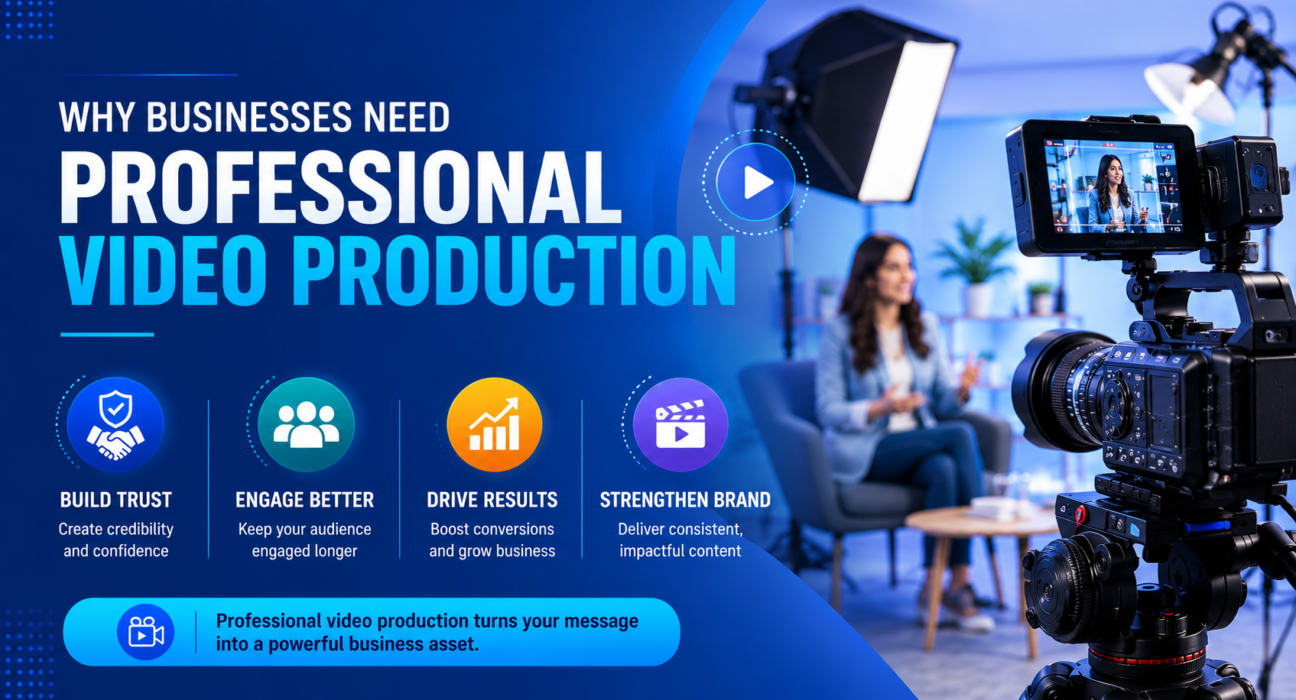
Why Businesses Need Professional Video Production
1. It Builds Trust Faster Than Any Other Format
People form an impression of a business within seconds of watching a video. Poor lighting, muffled audio, or shaky camera work signals a lack of professionalism – even if the product or service is excellent. A well-produced video, on the other hand, communicates credibility before a single word is spoken.
For service-based businesses especially, video is often the first real “interaction” a prospect has with a brand. That first impression matters more than most companies realize.
2. Video Increases Engagement and Retention
Written content is easy to skim past. Video demands attention, and when done well, it holds that attention far longer. Explaining a concept visually – with motion, pacing, and sound – helps audiences retain information more effectively than text alone.
This matters for:
- Product explainer videos
- Onboarding and training content
- Sales presentations
- Social media marketing
3. It Directly Impacts Conversions
Landing pages with video consistently see better engagement than those without. When a visitor can watch a 60–90 second explanation of what a product does and why it matters, they spend less time guessing and more time deciding. Professional production ensures the message is clear, the pacing is right, and the call-to-action doesn’t get lost in poor editing.
4. It Strengthens Brand Consistency
A single unpolished video might not hurt much. But businesses that publish video regularly need consistency in tone, color grading, pacing, and branding. Professional production teams build style guides and templates that keep every video aligned with the brand – something that’s difficult to maintain with ad-hoc, in-house filming.
5. It Supports Multiple Business Functions
Video isn’t just a marketing tool anymore. Businesses use professional video for:
- Investor pitch decks and fundraising materials
- Internal training and compliance videos
- Customer testimonials and case studies
- Product demos and tutorials
- Recruitment and employer branding
- Event recaps and company culture content
A single well-produced video can often be repurposed across several of these functions, extending its value well beyond the initial cost.
Professional Video Production vs. DIY Video: A Quick Comparison
| Factor | DIY / In-House Video | Professional Video Production |
|---|---|---|
| Equipment | Smartphone or basic camera | Cinema-grade cameras, lighting, audio gear |
| Planning | Minimal or none | Scripted, storyboarded, strategically planned |
| Editing | Basic cuts, limited effects | Color grading, sound design, motion graphics |
| Consistency | Varies video to video | Standardized brand style across content |
| Time investment | Often high for the team internally | Managed by a dedicated production team |
| Best for | Casual updates, quick social clips | Marketing campaigns, product launches, training, investor materials |
DIY video still has a place — especially for quick, low-stakes social content. But for anything tied to revenue, hiring decisions, or brand reputation, professional production is usually the safer investment.
When Does a Business Actually Need Professional Video Production?
Not every video needs a full production crew. Here’s a practical way to think about it:
Professional production is worth it when:
- The video will be a primary asset on your homepage, landing page, or ad campaign
- You’re launching a new product or service
- The content will be used for fundraising or investor communication
- You need the video to represent your brand for months or years
- The message is complex and needs clear visual explanation
DIY or lightweight production may be enough when:
- You’re posting quick, casual updates on social media
- The content is meant to feel authentic and unpolished (behind-the-scenes style)
- Budget or timeline constraints make full production impractical
- The video has a short shelf life (a few days or weeks)
How Much Does Professional Video Production Cost?
Costs vary significantly based on video length, complexity, location, crew size, and post-production needs. A short social media clip will cost far less than a multi-location product launch video with motion graphics and voiceover. Because pricing varies so widely by market and project scope, it’s best to request quotes from a few production companies based on your specific goals rather than relying on a single average figure.
How to Choose the Right Video Production Partner
Selecting a production company is as important as the production itself. Consider the following before committing:
- Review their portfolio – Look for previous work in your industry or a similar style.
- Ask about their process – A clear pre-production and revision process signals professionalism.
- Check turnaround times – Make sure their timeline fits your launch or campaign schedule.
- Clarify deliverables – Confirm formats, resolutions, and platform-specific versions (social, web, ads).
- Understand pricing structure – Ask what’s included and what counts as an added cost (extra revisions, additional locations, rush delivery).
Because video production companies vary widely in specialty, pricing, and quality, many businesses use a research platform like GoFirms to compare production companies, review their focus areas, and shortlist providers before reaching out for quotes. This kind of comparison step can save significant time versus vetting agencies one by one from scratch.
Common Mistakes Businesses Make With Video Production
- Skipping the script or planning phase – leads to unfocused, rambling videos
- Prioritizing visuals over message clarity – a beautiful video that doesn’t explain the offer clearly won’t convert
- Ignoring audio quality – viewers tolerate imperfect visuals more than they tolerate bad sound
- Producing one video and stopping – consistency matters more than a single high-budget piece
- Not planning for multiple formats – a video shot only in landscape can’t be repurposed for vertical social platforms without extra work
Frequently Asked Questions
What is the difference between video production and videography? Videography typically refers to filming an event or moment as it happens, often with minimal editing. Video production is a broader, structured process that includes scripting, planning, filming, and post-production editing to create a polished final piece designed around a specific business goal.
How long does professional video production take? Timelines vary based on complexity, but most projects take anywhere from a few days to several weeks. Simple social clips can be turned around quickly, while product launch videos or multi-location shoots with heavy post-production typically require longer planning and editing time.
Do small businesses really need professional video production? Not always for every piece of content, but for key assets like homepage videos, product launches, or investor materials, professional production builds credibility that DIY footage often can’t match. Small businesses can start with one or two high-impact videos rather than a large content library.
What should I prepare before contacting a video production company? Have a clear goal for the video, a rough idea of length and platform (website, social, ads), your budget range, and any brand guidelines. The clearer your brief, the more accurate the production company’s proposal and timeline will be.
Can professional videos be repurposed for social media? Yes. A well-planned production often includes multiple edits or aspect ratios from the same footage, allowing one shoot to produce a long-form video, short social clips, and even static image assets.
Is professional video production worth it for B2B companies? Yes. B2B buyers often research vendors extensively before making contact, and a clear, professional explainer or case study video can build trust and clarify complex offerings faster than a page of text alone.
How do I find a reliable video production company? Start by reviewing portfolios and case studies relevant to your industry, then compare a few options based on process, pricing, and turnaround time. Platforms like GoFirms can help streamline this research by allowing businesses to compare service providers in one place before making outreach decisions.
Conclusion
Professional video production has moved from a “nice to have” to a genuine business necessity – especially for companies that rely on video to build trust, explain their offer, or stand out in a crowded market. The difference between amateur and professional video isn’t just polish; it’s clarity, consistency, and the ability to turn a video into a lasting business asset rather than a disposable post.
If you’re weighing whether to invest in professional production, start with the assets that matter most: your homepage, your core product explainer, or your next major launch. From there, comparing production partners through a platform like GoFirms can help you make a more informed choice before committing budget and time.