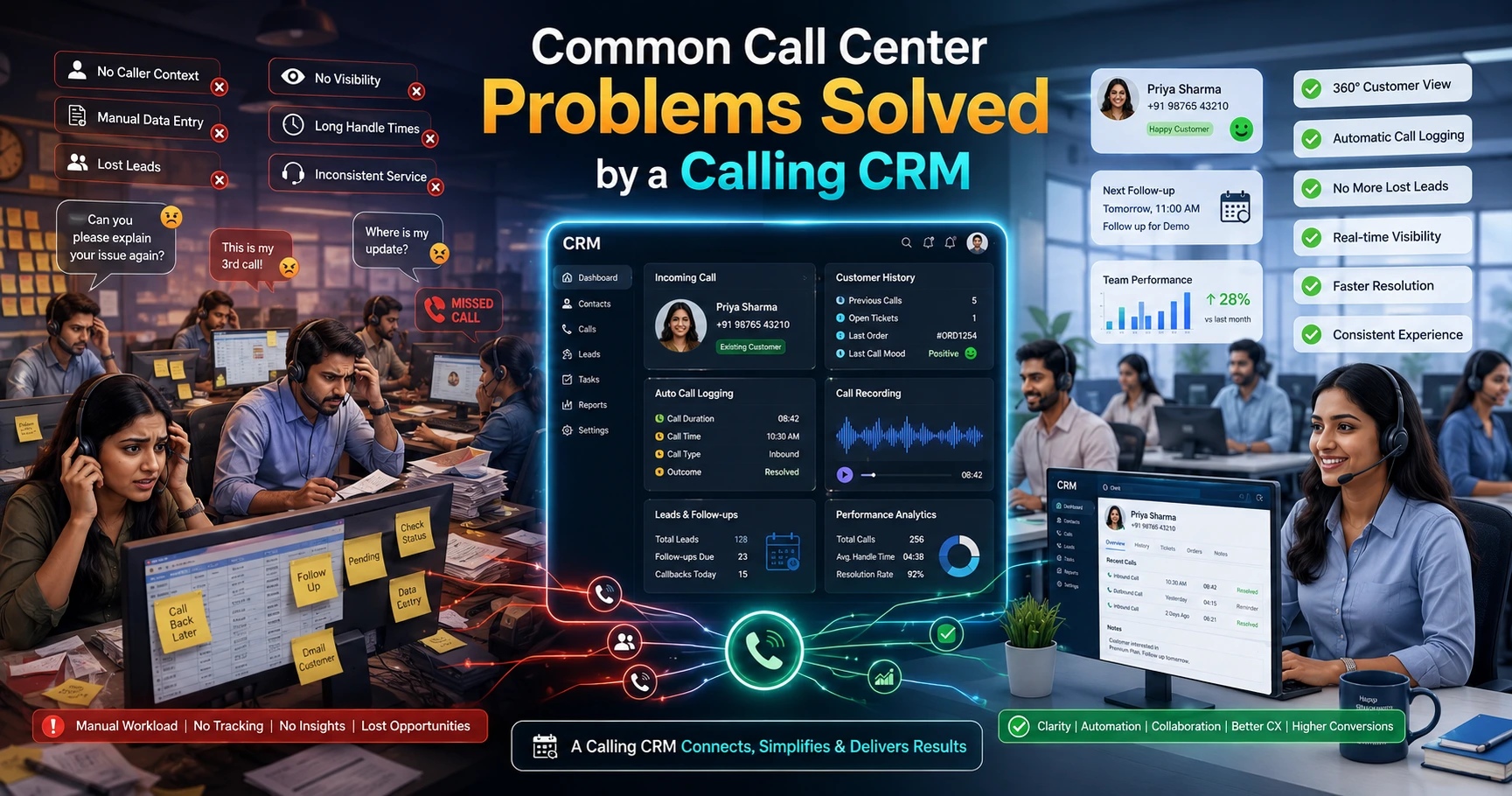
A financial services sales team rarely sells just one product to one type of customer. For example, the same telecaller might pitch a mutual fund SIP in the morning. By noon, they follow up on a loan enquiry. By evening, they chase a pending KYC document. So when this work sits in spreadsheets or a generic contact list, things start to fall through the cracks.
This is exactly where a purpose-built financial services CRM helps. It does more than store phone numbers. It tracks investment intent, risk profile, product interest and follow-up status for every prospect. As a result, no single conversation depends on one person’s memory. For a closer look at this in practice, many teams review how a financial services CRM sets up its pipeline stages, lead fields and follow-up rules for advisory and distribution work.
What Is a Financial Services CRM?
A financial services CRM manages leads, calls and client relationships for businesses that sell financial products. This covers mutual funds, insurance, loans, deposits and wealth advisory services. It usually tracks the product a lead wants, the investment or loan amount, the KYC status, and the lead source. It also handles standard functions like call logging and follow-up scheduling.
A generic sales CRM assumes a short, one-step sale. A financial services CRM assumes something different: profiling conversations, proposal follow-ups and a compliance-heavy onboarding process that unfolds over several calls.
Why Generic Sales Tools Fall Short Here
Financial services selling has a few traits. Together, these make plain spreadsheets or basic CRMs hard to work with.
Multiple products, one customer
A single client can need a loan, an insurance policy and a mutual fund at different points in time. Because of this, tracking each product on a separate sheet or sticky note causes leads to slip away quietly.
Profiling takes more than one call
Agents usually need to understand risk appetite, income bracket and existing investments first. Only then can they propose a suitable product. As a result, sales cycles run longer and need more touchpoints per lead than a typical retail sale.
Compliance is not optional
Do Not Call (DND) preferences, call recording and data protection all carry more weight in financial services than in most other industries. Regulators and customers both watch closely how firms handle financial data.
Follow-up gaps are expensive
A client who submits KYC documents and hears nothing back often moves to a competitor. So does a client whose proposal call gets delayed. In short, small gaps like these build or destroy trust in financial services.
Core Capabilities a Financial Services CRM Should Have
| Capability | Why it matters for financial services |
|---|---|
| Lead capture from multiple sources | Enquiries come from ads, portals, referrals and websites – all need to land in one place, deduplicated |
| Product and investment fields | Tagging each lead by product (loan, insurance, mutual fund, deposit) and amount makes reporting meaningful |
| Risk profiling and KYC status fields | Lets agents and managers see who is ready for a proposal and who is stuck at documentation |
| Auto dialer | Reduces manual dialing time so agents spend more time talking, less time searching for numbers |
| Structured pipeline stages | Reflects the real journey – enquiry, contact, profiling, proposal, onboarding – instead of a generic “won/lost” |
| Follow-up reminders | Prevents warm leads from going cold during multi-call sales cycles |
| Call recording and DNC compliance | Supports audit requirements and keeps outbound calling within regulatory limits |
| Reporting by agent, product and source | Shows which products and lead sources are actually converting |
How the Pipeline Should Actually Look
Most financial services teams follow a similar underlying journey across products. Typically, a pipeline built for this looks like:
- New Lead – an enquiry from an ad, portal, referral or website form
- Contacted – first call done, basic interest confirmed
- Profiling – risk appetite, income or requirement understood
- Proposal – a specific product and amount proposed to the client
- Onboarded – documentation complete, client active
- Lost – not interested, or moved to a competitor
When a manager attaches a deal value to each lead at the proposal stage, they can see open pipeline value, win rate and average deal size, not just call counts.
A Practical Example
Picture a hypothetical wealth advisory firm with 12 telecallers. They handle enquiries for mutual funds, insurance and fixed deposits, with leads coming in from Facebook ads, the company website and referrals.
Without a structured system, an agent might call a lead once, jot down “interested” on a spreadsheet, and then forget to follow up. A financial services CRM changes this. It flags the lead for a follow-up call automatically, records the product and amount discussed, and shows any pending KYC status to the next agent who picks up the call.
Note that this is a hypothetical scenario meant to illustrate the workflow, not a documented case study.
Benefits of Using a Financial Services CRM
- Fewer leads slip through the cracks – the system captures, assigns and tracks every enquiry, instead of leaving it in someone’s notebook or personal WhatsApp
- Faster response times – an auto dialer calls new leads while their interest is still fresh
- Better visibility for managers – managers see pipeline value, conversion rate and agent performance without chasing anyone for updates
- Cleaner compliance trail – call recordings and DNC checks lower the risk of regulatory complaints
- More informed conversations – an agent can pick up a lead mid-cycle and see prior notes instead of starting from zero
Common Mistakes to Avoid
- Treating every lead the same – a mutual fund enquiry needs different profiling questions than a loan enquiry, so avoid using one generic script for both
- Ignoring KYC status – flag a proposal that’s stuck on documentation; don’t leave it in the same bucket as a cold lead
- Skipping DNC checks – calling numbers on the Do Not Disturb list creates regulatory risk and invites customer complaints
- Relying only on call volume as a metric – in financial services, profiling quality and proposal size often matter more than raw call count
- No follow-up cadence – financial decisions take time, so a single call rarely closes a policy or a loan
How TeleCalling CRM Supports Financial Services Teams
TeleCalling CRM’s financial services setup gives agents lead fields for product type, investment amount, risk profile and KYC status. It also pre-structures the pipeline around New Lead, Contacted, Profiling, Proposal and Onboarded stages, and it captures and auto-assigns leads from website forms, Facebook and Google ads, referrals, and Google Sheets.
The platform pairs this with an auto dialer that skips DNC numbers, follow-up scheduling with reminders, and a live view of team activity. Managers can then watch calls, conversions and pipeline value as they happen. Of course, none of this replaces the judgment a good advisor brings to a profiling conversation. It simply makes sure that conversation gets followed up on, and that the information doesn’t get lost between calls.
Teams that want to compare plans and included features can check the telecalling software pricing page before deciding what fits their team size.
FAQs
What is a financial services CRM?
It is software that helps businesses selling financial products manage leads, calls, follow-ups and client onboarding in one place. This includes loans, insurance, mutual funds and deposits.
How is it different from a regular CRM?
It uses fields and pipeline stages built for financial selling. These include product type, investment amount, risk profiling and KYC status, plus compliance features like DNC checks and call recording.
Can one system handle multiple financial products?
Yes. Agents tag each lead by product – loan, insurance, mutual fund or deposit. Managers then filter and report on a single pipeline by product, without needing separate tools.
Does a telecalling CRM help with KYC follow-up?
Yes. Once an agent notes the KYC status on a lead, managers can quickly spot clients stuck at documentation and prioritise those follow-up calls.
Is DNC compliance built into these systems?
Good telecalling CRMs skip Do Not Disturb numbers automatically during auto dialing. This lowers the risk of regulatory complaints for financial services callers.
Do small advisory teams need a CRM, or is it only for large teams?
Even a small team of 3–5 advisors benefits. Missed follow-ups and forgotten leads usually cost more than the CRM itself, regardless of team size.
How long does it take to set up a financial services CRM?
Most cloud-based telecalling CRMs go live the same day. Agents simply import leads from a CSV, or connect ad accounts and web forms directly.
Conclusion
Financial services selling depends on relationships and strict compliance, so spreadsheets or generic contact tools rarely keep up. A financial services CRM built around product tagging, risk profiling, KYC status and a realistic pipeline gives advisors and distributors a clearer view of every client, without adding extra manual work.
So, if you want to see how this looks for your own product mix, explore the lead management software built specifically for outbound financial services calling.