You need a study table. Or you’re trying to sell an old phone. Maybe you want to buy a bike without spending too much, or clear out furniture before moving. These are everyday needs. But most platforms make them harder than they should be. You scroll through hundreds of listings from across the city. Half of them are overpriced. Many sellers don’t respond. Some are too far away to make the meeting practical. By the time you find something that works, you’ve spent hours comparing options, negotiating prices, and coordinating logistics. There’s a simpler way. When you buy and sell locally, you deal with people nearby. Transactions happen faster. Prices are more realistic. And you avoid the complications that come with distance, shipping, and dealing with strangers you’ll never meet. Here’s how to make local buying and selling work better for you.
The Core Problem: Most Platforms Aren’t Built for Local Deals
Large marketplaces try to serve everyone. That means connecting buyers and sellers across entire cities or even states. For certain products, that makes sense. But for second-hand items, local transactions are almost always better. When you’re looking at listings from all over, you waste time on options that aren’t practical. A great deal on a sofa doesn’t help if the seller is two hours away and expects you to arrange transport. Sellers face similar issues. They get messages from people across town who ask detailed questions but never commit because the distance doesn’t work out. In India, where traffic, transportation costs, and time constraints are real factors, proximity matters. A buyer ten minutes away is far more valuable than ten buyers scattered across the city. Simple classifieds focused on local connections solve this by prioritising what’s nearby. You see listings from your area first. You connect with people you can actually meet.
Smart Buying: How to Find Good Deals Locally
Start with a clear idea of what you need
Before you search, know what you’re looking for. If you need a phone, decide on the brand, model, or budget range. If you want furniture, know the size and type. This helps you filter listings quickly instead of getting distracted by things you don’t really need.
Focus on listings from your area
Don’t waste time on items that are too far away. Stick to sellers within a reasonable distance. This makes meeting easier and keeps transport costs low. On platforms like Sympl that prioritise local buying and selling, this happens automatically. You see what’s available nearby without sorting through irrelevant listings.
Check the listing carefully
Look at the photos. Read the description. Note the condition, age, and reason for selling. If something seems unclear, ask before committing to meet. Good sellers provide honest information. If a listing is vague or the photos are poor quality, that’s usually a sign to move on.
Ask the right questions
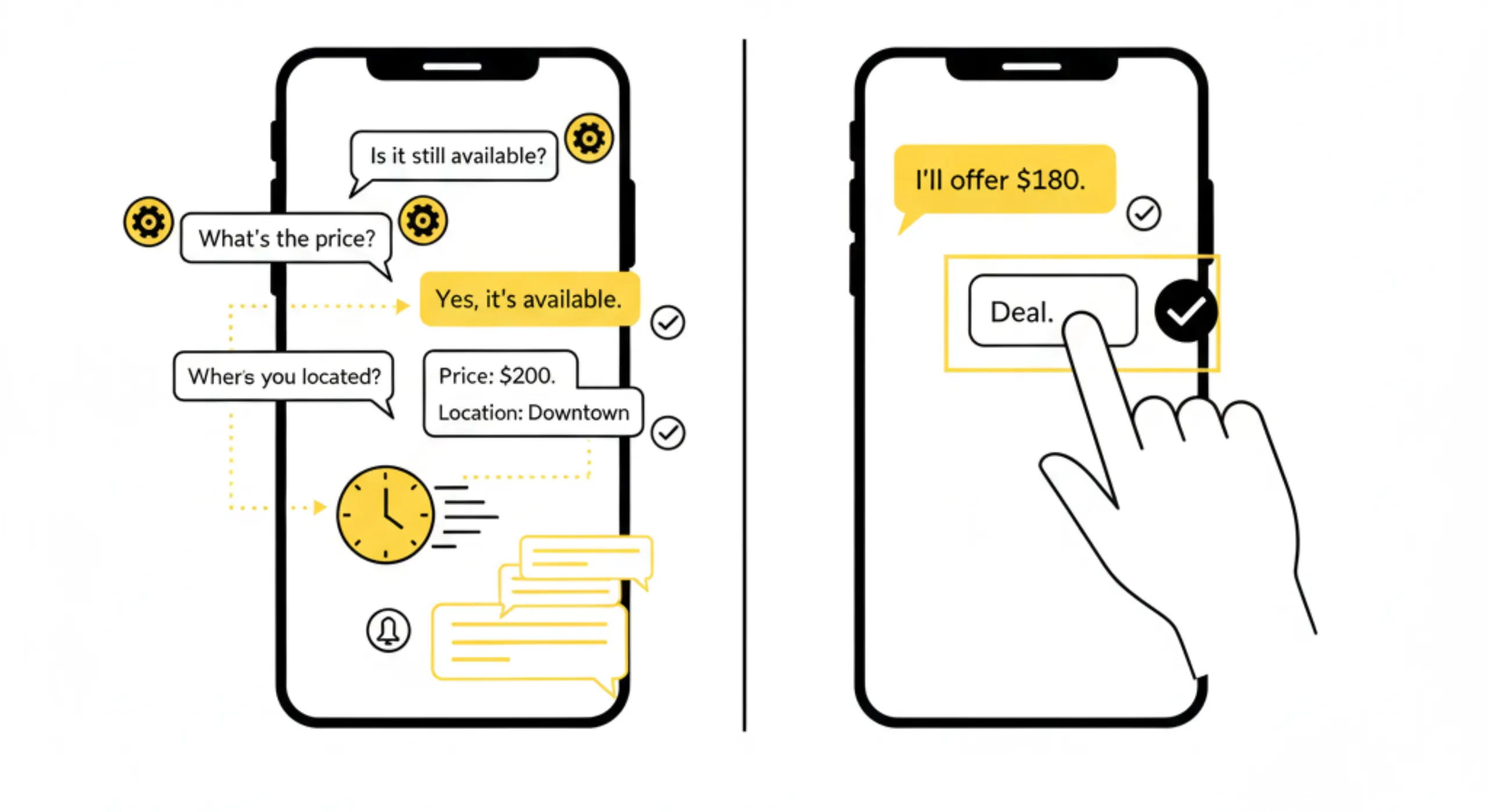
Don’t just ask “Is it available?” Get specific. Ask about defects, how long it’s been used, whether the original accessories are included, and if the price is negotiable. Clear questions lead to useful answers. And useful answers help you decide faster.
Meet in a safe, convenient location
For smaller items, meet at a public spot like a café or metro station. For larger items like furniture or bikes, you might need to visit the seller’s place, but make sure someone knows where you’re going. Trust your instincts. If something feels off, it’s okay to back out.
Inspect before you pay
This is the biggest advantage of local buying. You see the item in person before committing. Check for damage, test functionality, and make sure it matches the description. If it’s not what you expected, walk away. No need to accept something just because you travelled to see it.
Smart Selling: How to Close Deals Faster
Write a clear, honest listing
Describe what you’re selling without exaggerating. Mention the condition, any defects, and why you’re selling. Add a few good photos that show the item clearly. Honest listings attract serious buyers. Overhyped descriptions waste everyone’s time.
Price it realistically
Check what similar items are selling for in your area. If your price is too high, buyers will skip your listing. If it’s too low, you lose money unnecessarily. A fair price based on actual market conditions helps you sell items fast.
Respond quickly to messages
When a buyer contacts you, reply as soon as possible. Delays give them time to find other options. Quick responses show you’re serious and keep the deal moving forward.
Be flexible with meeting times
If a buyer wants to meet in the evening or on the weekend, try to accommodate them. The easier you make it, the faster the sale happens. Local buyers appreciate convenience. A little flexibility on your part can close the deal.
Mention your location clearly
Don’t just say “Delhi” or “Chennai.” Mention the specific neighbourhood or nearby landmark. This helps local buyers and sellers find you faster and decide if the distance works for them.
Stick to simple payment methods
Cash or UPI works best for local transactions. Avoid complicated payment arrangements or requests to ship items before payment. Keep it straightforward.
How Local Classifieds Simplify Transactions
Platforms designed for local buying and selling remove unnecessary steps. You don’t navigate complex category systems. You don’t wait for approvals. You don’t deal with shipping logistics or payment disputes. Direct buyer seller interaction means you talk to each other, agree on terms, and meet. No middlemen, no delays, no confusion. On Sympl and similar simple classifieds, the process is as basic as it should be. You list your item or search for what you need. You connect with people nearby. You close the deal quickly. This simplicity is especially useful in India, where people value practicality over flashy features. You don’t need a complicated platform to sell a table or buy a phone. You just need something that works.
Real-Life Scenarios Where Local Buying Works Best
A student buying textbooks
You need second-year engineering books. You find a senior in your college area selling the exact set. You meet at the campus café, check the books, and buy them for half the original price. Total time: one hour. Buying from someone nearby means you get what you need without waiting for delivery or paying shipping costs.
A family selling old furniture
You’re moving to a smaller flat and need to sell a dining table and chairs. A family ten minutes away needs exactly that. They visit, check the furniture, and take it the same day. You don’t pay for transport, and they get a good deal. Local connections turn what could be a weeks-long process into a same-day transaction.
A professional buying a bike
You’re looking for a second-hand bike for your daily commute. You find one listed by someone in your neighbourhood. You test-ride it, check the documents, and buy it over the weekend. No dealership markups, no unnecessary paperwork. For high-value items like bikes, seeing and testing before buying is essential. Local sellers make that possible.
A college student clearing out hostel items
At the end of the semester, you’re going home and need to sell a mini-fridge, table fan, and study lamp. Other students in the hostel buy them within days because everyone’s nearby and the prices are fair. When your buyers are in the same building, selling becomes effortless.
Who Benefits Most from Smarter Local Transactions
Students looking for low-cost buying options
Students need affordable items and don’t have time to waste on complicated processes. Local buying gives them access to textbooks, electronics, and furniture at realistic prices, available nearby.
Families decluttering or upgrading
When you’re clearing out old appliances, kids’ items, or furniture, local buyers make the process manageable. No shipping, no delays, no complications.
Working professionals with limited time
If you’re selling a laptop, bike, or gadget, you can’t spend entire weekends managing the sale. Local buyers let you close deals quickly without disrupting your routine.
First-time buyers and sellers
If you’ve never bought or sold online, starting locally is less intimidating. You meet people face-to-face, which feels safer and more straightforward.
Anyone who values convenience
Some people just prefer simple, direct transactions. No apps with complicated interfaces. No customer support tickets. Just two people agreeing on a deal and getting it done.
Cost and Time Savings with Local Transactions
You avoid transport and shipping costs
When the buyer is nearby, you don’t pay for delivery. They pick up the item themselves, or you drop it off on your way somewhere. For bulky items, this saves a significant amount.
You skip inflated marketplace prices
Direct buyer–seller interaction means no platform fees eating into your profit. You set the price, the buyer pays it, and you keep the full amount. Buyers also benefit. They’re not paying extra for delivery, packaging, or seller commissions built into the price.
You save time with faster transactions
Local deals close in days, not weeks. You list, someone nearby contacts you, you meet, and it’s done. No waiting for couriers, no tracking shipments, no dealing with returns. Time saved is often more valuable than money saved. When you can sell items fast, you can focus on other priorities.
You reduce risks
Meeting in person eliminates most transaction risks. You see the item before paying. The seller gets cash immediately. No payment disputes, no damaged goods in transit, no fraudulent buyers or sellers.
Common Mistakes to Avoid
Listing items without proper photos
Buyers want to see what they’re getting. Blurry or insufficient photos reduce interest. Take clear pictures from multiple angles.
Being unrealistic about pricing
Overpricing items means they sit unsold. Underpricing means you lose money. Check local market rates before deciding.
Ignoring location in your listing
If buyers don’t know where you are, they’ll skip your listing. Always mention your area clearly.
Taking too long to respond
Slow responses cost you buyers. If someone messages you, reply within a few hours at most.
Meeting at inconvenient or unsafe locations
Always choose public spots for small items. For larger items, make sure someone knows where you’re going.
Conclusion
Buying and selling doesn’t need to be complicated. When you focus on local connections, transactions become simpler, faster, and more reliable. You deal with people nearby. You meet in person. You inspect items before paying. You avoid shipping, delays, and unnecessary costs. Platforms like Sympl that prioritise local buying and selling make this even easier. No crowded marketplaces, no confusing features, no wasted time. Just simple classifieds that connect local buyers and sellers efficiently. Whether you’re a student looking for low-cost buying options, a family clearing out unused items, or a professional selling something quickly, local transactions give you control, convenience, and practical savings. Smart buying and selling isn’t about finding the perfect platform. It’s about choosing the approach that saves you time, money, and unnecessary hassle. And for most everyday transactions, that approach is local.