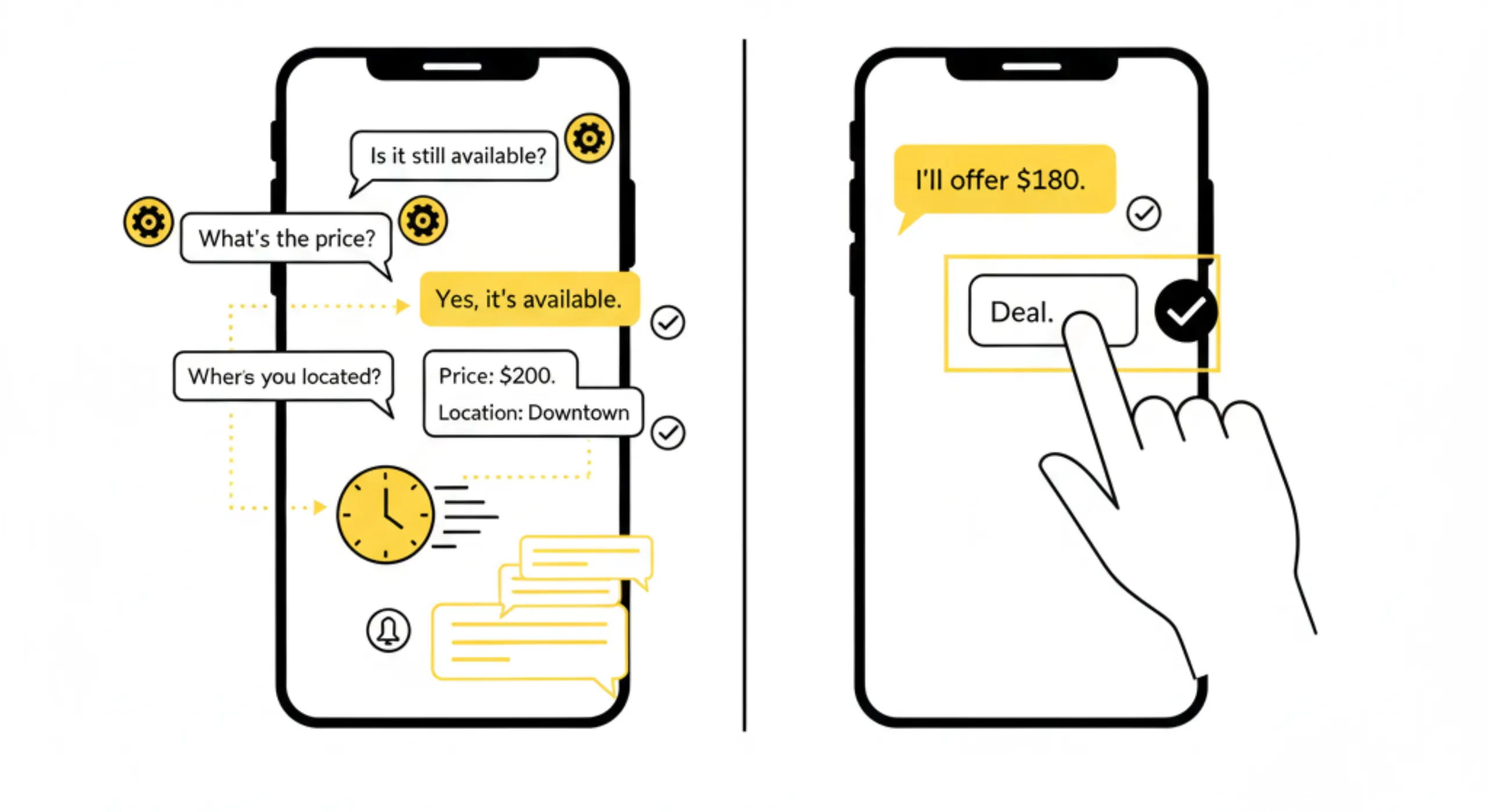
You’ve listed your old bike, and suddenly three people are interested at the same time.
One message saying they’ll come see it Saturday morning. Another confirms they’re visiting Saturday afternoon. A third wants to come “sometime this weekend.”
Saturday morning arrives. The first buyer doesn’t show up. You message them no response. Now the afternoon buyer is your hope, but what if they also bail? Should you tell the third person to come too, risking a double-booking if the afternoon buyer actually shows?
By Sunday evening, your bike is still unsold, you’ve wasted your entire weekend waiting for people who didn’t follow through, and you’re frustrated with the whole process.
Managing multiple buyers sounds like a good problem to have, but it quickly becomes stressful when you don’t have a clear system.
When you buy and sell locally through simple classifieds like Sympl, handling multiple interested buyers becomes simpler. The process is straightforward, buyers are nearby and can move quickly, and you can manage everything without elaborate coordination or wasted weekends.
Why Multiple Buyers Create Confusion
Having several people interested should make selling easier. In reality, it often complicates things especially when you’re not prepared for it.
Everyone wants to be first, but no one commits
Buyers will express interest, ask to hold the item, or say they’re “definitely coming” – but that doesn’t mean they’ll actually follow through.You’re left trying to manage multiple maybes, not knowing who’s serious and who’ll ghost you.
Timing coordination becomes a puzzle
When three buyers want to visit at different times, you need to coordinate schedules, avoid overlaps, and keep everyone informed about status. If you’re working, managing a household, or running a business, this coordination becomes another job.
You risk losing all buyers if you handle it poorly
If you commit to one buyer who doesn’t show, the others might have bought elsewhere by the time you circle back to them. If you try to manage everyone simultaneously, you might accidentally double-book or confuse who said what. Poor management means you end up with no sale despite having multiple interested buyers.
Communication gets messy across different conversations
When you’re juggling messages from several buyers, it’s easy to mix up who asked what, who confirmed when, or what you promised to whom.
You might tell one buyer the item is available when you’ve already tentatively promised it to another. Or you might forget to update someone after the item sells.
This creates confusion, wastes time, and occasionally burns bridges with buyers who might have recommended you to others.
When you sell items fast through local classifieds, the speed of transactions helps – local buyers can visit quickly, make decisions on the spot, and complete purchases before you’re overwhelmed managing a dozen interested parties.
Practical Strategies for Managing Multiple Buyers
Respond in the order enquiries arrive, but prioritize commitment
When multiple buyers message you, respond to them in order – but pay attention to who’s showing real commitment.
“Can I come see it tomorrow at 10 AM?” gets priority over “Interested, will let you know when I can visit.”
Someone suggesting a specific time is demonstrating seriousness. Someone being vague is testing the waters.
Use a first-come-first-served approach with time limits
Tell the first serious buyer: “You can come inspect tomorrow at 10 AM. If you decide not to buy or don’t show, I’ll move to the next person.”
Then tell the second buyer: “Someone is coming to see it tomorrow morning. If that doesn’t work out, you’re next in line. I’ll update you by noon.”
This keeps everyone informed, sets expectations, and puts gentle pressure on the first buyer to follow through.
Don’t hold items without deposit or firm commitment
“Can you hold it for me? I’ll come next week” is not a commitment – it’s a request for you to turn away other buyers while they keep their options open.
Unless someone pays a small deposit or commits to a specific time within 24-48 hours, keep the item available and continue talking to other buyers.
Be polite but firm: “I can’t hold it without a deposit, but if you’d like to come see it this weekend, let me know a specific time.”
Schedule inspections close together if needed
If you have multiple serious buyers and don’t want to waste your entire weekend, schedule them in sequence.
“Buyer A at 10 AM, Buyer B at 11:30 AM if Buyer A passes.” Be transparent about this with everyone involved.
Most buyers understand. They’d rather wait an hour for their turn than lose the opportunity completely.
Keep communication clear and update everyone promptly
If the first buyer purchases, immediately message everyone else: “The item has sold. Thanks for your interest.”
If the first buyer backs out, quickly contact the second: “The first buyer passed. Are you still interested in inspecting today?”
Prompt updates show respect for everyone’s time and keep your reputation intact.
Trust action over words
A buyer who says “I’m definitely buying it” but hasn’t visited yet hasn’t actually committed.
A buyer who schedules a visit for tomorrow morning is closer to committing.
A buyer who comes, inspects, and says “I’ll take it” has committed.
Don’t treat verbal interest as a done deal. Keep your options open until money changes hands.
Use templates or quick replies for common updates
Create standard messages for frequent situations:
“Someone is inspecting it now. You’re next in line – I’ll update you within the hour.”
“The item is still available. Can you suggest a specific time to visit?”
“Items sold. Thanks for your interest”
Templates save you from typing the same thing repeatedly and reduce the mental load of managing multiple conversations.
How Local Buying and Selling Simplifies Multiple Buyers
Local buyers can move quickly
When someone lives twenty minutes away, they can visit today or tomorrow, not “sometime next week.”
This speed means you’re not juggling maybe for days. Buyers inspect, decide, and either buy or pass – allowing you to move to the next person quickly.
Face-to-face transactions create commitment
When buyers know they’ll meet you in person, they’re less likely to waste your time.
The accountability that comes with local, in-person transactions means buyers are more likely to show up when they say they will.
Platforms like Sympl focus on these local connections, naturally filtering for serious buyers who can act quickly.
Inspection-based selling is decisive
A buyer comes, sees the washing machine works perfectly, and buys it on the spot. Done.
Or they inspect, find something they don’t like, and pass. Also done.
Either way, you have an answer within hours, not days. This lets you move confidently to the next buyer if needed.
Fewer buyers, but higher quality
When you list locally, you typically get fewer enquiries than on national platforms – but the ones you get are from people who can realistically purchase.
Managing three serious local buyers is far easier than managing fifteen random enquiries from across the country, most of whom will never follow through.
Natural first-come-first-served works better locally
“Someone’s coming to see it this afternoon. If you want to be next, I can schedule you for tomorrow morning.”
When everyone’s local, this sequencing works smoothly. Buyers can accommodate short-notice visits because distance isn’t an issue.
Cost and Time Benefits of Efficient Buyer Management
Less time wasted on coordination
When you have a clear system first-come-first-served, time limits, prompt updates – you’re not spending hours figuring out who to prioritize or how to manage everyone. You make quick decisions and move forward.
Faster sales completion
Efficient management means items sell faster because you’re not getting stuck in coordination paralysis.
You work through interested buyers systematically until someone completes the purchase.
Better experience for buyers too
Buyers appreciate transparency. When you tell them where they stand “You’re first in line” or “Someone else is inspecting now, I’ll update you shortly” they respect it.
Clear communication builds trust, even with buyers who don’t end up purchasing. They might return for other items or recommend you to friends.
Preserved reputation in local community
When you handle multiple buyers fairly and communicate well, word spreads.
People remember sellers who were honest, kept them updated, and didn’t waste their time.
This reputation matters more in local selling where you might encounter the same buyers again or get referrals within the community.
Real-World Scenarios of Managing Multiple Buyers
Selling a bike with three interested parties
Buyer A messages first, wants to visit Saturday morning. You confirm.
Buyer B messages an hour later, wants to come Saturday. You say: “Someone’s coming in the morning. If that doesn’t work out, you’re next. I’ll update you by noon Saturday.”
Buyer C messages vaguely: “Interested, will visit soon.” You reply: “Great! Let me know a specific time. There are others interested so it’s first-come-first-served.”
Saturday morning, Buyer A comes, inspects, negotiates slightly, and buys. You immediately message Buyers B and C: “Bike sold. Thanks for your interest!”
Clean, efficient, done by Saturday afternoon.
Selling furniture with back-to-back inspections
You’re selling a sofa. Two buyers want to see it the same day.
You schedule them sequentially: “Buyer 1 at 4 PM, Buyer 2 at 5 PM.” You’re transparent: “If the first buyer purchases, I’ll let you know immediately so you don’t make a wasted trip.”
Buyer 1 comes, likes it, and buys. You message Buyer 2 right away: “Just sold. Thanks for your interest. I have a dining table also listed if you’re interested.”
<Buyer 2 appreciates the prompt update and actually comes to see the dining table instead.
Managing five enquiries for a laptop
Five people message about your laptop over two days.
Three send vague interest: “Lowest price?” You respond with the listed price and ask if they’d like to schedule an inspection. Two didn’t reply, they were just fishing.
Two buyers suggest specific times. You prioritize the one who can come soonest: tomorrow evening.
That buyer visits, tests the laptop, and purchases. You update everyone else immediately.
Total time managing this: maybe 30 minutes across two days. Not stressful because you had a clear approach.
Who Benefits Most from These Strategies
Working professionals selling on weekends
You have limited availability. You can’t spend all weekend coordinating buyers.
A systematic approach – schedule visits in sequence, set time limits, update promptly – lets you sell efficiently without sacrificing your whole weekend.
Parents with unpredictable schedules
Between kids’ activities and household responsibilities, you need flexibility but also clarity.
Managing buyers with a clear system means you’re not constantly wondering who’s coming when or scrambling to accommodate last-minute changes.
Students selling before relocating
You’re moving out soon and need to sell furniture, bikes, or electronics quickly.
Handling multiple buyers efficiently means you can work through interested parties fast and sell items before your deadline.
Anyone selling multiple items at once
If you’re clearing inventory – old office furniture, electronics stock, household items – you might be managing buyers for different items simultaneously. A systematic approach keeps everything organized without overwhelming you.
Conclusion:
Having multiple buyers interested is actually a good sign – it means your item is priced fairly and meets a real need.
The key is managing that interest without creating chaos or wasting your time.
First-come-first-served with time limits, clear communication, prioritizing commitment over vague interest, and quick updates – these simple practices keep everything moving smoothly.
When you buy and sell locally, this becomes even easier because local buyers can act quickly. You’re not coordinating across weeks or managing logistics across cities. Someone can visit today, decide, and you’re done.
Platforms like Sympl support this by keeping everything local and simple. You’re connecting with nearby buyers who can move fast, which naturally prevents the drawn-out coordination nightmares that happen on national platforms.
Multiple buyers don’t have to mean multiple headaches. With a clear approach and local connections, it just means faster sales and better odds of finding the right buyer quickly.