Walk through your house right now and count how many items you haven’t touched in six months. The guitar collects dust in the corner. The treadmill that’s become an expensive clothes hanger. The perfectly functional phone you replaced last year, now buried in a drawer.
Each item represents money that’s frozen. You spent it once, and now it’s just sitting there, not working for you, not helping anyone, just existing.
Someone within five kilometers of where you’re sitting would pay real money for at least three of those things today. Not someday. Today.
The gap between “I should sell this” and actually selling it isn’t about motivation. It’s about friction. Every marketplace platform you’ve tried makes the process harder than it needs to be, so you keep postponing it.
Here’s What Usually Happens When You Try To Sell Something
You finally commit to selling that camera you upgraded from. You download the most popular marketplace app everyone uses. You create an account, verify your phone number, maybe upload identification documents.
Now comes the listing part.
The form asks for details you don’t remember. Purchase date? No idea. Original packaging? Long gone. Warranty information? Good luck. You skip what you can, guess the rest, spend fifteen minutes getting photos to upload correctly.
You write a description, set what seems like a fair price based on nothing in particular, and publish.
Then you wait.
Three days pass before anyone messages you. When they do, it’s someone asking if you’ll drop the price by half. You counter reasonably. They disappear. Two more messages come in. Both ask questions already answered in your listing. One wants you to ship it to another state and seems confused when you explain you’re only selling locally.
A week goes by. Another message arrives from someone who seems genuinely interested. You respond immediately. They ask to see it tomorrow. You agree on a time. Tomorrow comes. They don’t show up. No message, no explanation, nothing.
By week three, you’ve forgotten about the listing entirely. The camera continues sitting on your shelf, and you’ve mentally written off the whole experience as not worth the hassle.
This pattern repeats itself across millions of attempted transactions. Not because people don’t want to buy and sell, but because platforms designed for high volume and business sellers create terrible experiences for regular people making occasional transactions.
The Buyer’s Experience Isn’t Any Better
You need a desk for your home office. Something simple and functional. You’re willing to buy used if it saves money and you can find something decent.
You search on multiple platforms. Results flood in. Some listings are from sellers 50 kilometers away. Others have been posted months ago and never taken down. Several have terrible photos that don’t actually show the desk clearly.
You start messaging sellers. Half never respond. Of those who do, two are suddenly unavailable when you try to schedule a time to see the desk. One tells you the desk is actually in worse condition than the photos suggested. Another quotes you a different price than what was listed.
After investing hours into this search, you’re seriously considering just buying new. Yes, it costs more, but at least it’s straightforward. You order, it arrives, you’re done.
The used option should be cheaper and easier. Instead, it’s cheaper and significantly more frustrating. That calculation only works if you value your time at zero.
What If The Process Actually Made Sense
Think about how buying and selling works in the physical world.
Your neighbor mentions they’re getting rid of a bookshelf. You say you’re interested. You walk over, look at it, agree on a price, carry it home. Total time invested: thirty minutes. Total complications: zero.
This transaction worked because it had three elements most online marketplaces lack: proximity, directness, and simplicity.
Proximity meant you could see the item immediately. No coordination across time zones or planning around shipping schedules. Just walk over and look.
Directness meant two people communicating without intermediaries, algorithms, or platform requirements getting in the way. Question, answer, done.
Simplicity meant the entire process contained exactly the steps necessary and nothing more. No forms, no verification layers, no terms and conditions to review.
Sympl replicates those three elements for transactions between people who don’t already know each other. It’s essentially a neighborhood exchange system scaled to city level.
Why Geography Actually Matters
Most marketplace platforms treat location as one filter among many. It’s an afterthought, something you can adjust if you want to narrow results.
This fundamentally misunderstands how local transactions work.
When someone sees an item listed nearby, their mental calculation changes entirely. “I could swing by after work” becomes realistic rather than theoretical. The psychological barrier to following through drops significantly.
For sellers, local buyers represent serious interest. If someone messages you about an item and they’re twenty minutes away, they can actually come see it. They’re not asking hypothetical questions. They’re evaluating whether to make the trip.
This geographic reality filters out time-wasters naturally. People don’t typically message about items an hour away unless they’re genuinely interested. Casual browsers stick to what’s convenient.
The result is a higher percentage of messages that lead to actual transactions. Less noise, more signals. Conversations that go somewhere instead of fizzling out.
How Sympl Removes Every Unnecessary Step
The listing process is deliberately stripped down.
Open the app. Choose a category that fits what you’re selling. Take photos with your phone right then no need for perfect lighting or professional staging. Type a few sentences describing the item and its condition. Enter a price. Tap publish.
From decision to live listing: under five minutes.
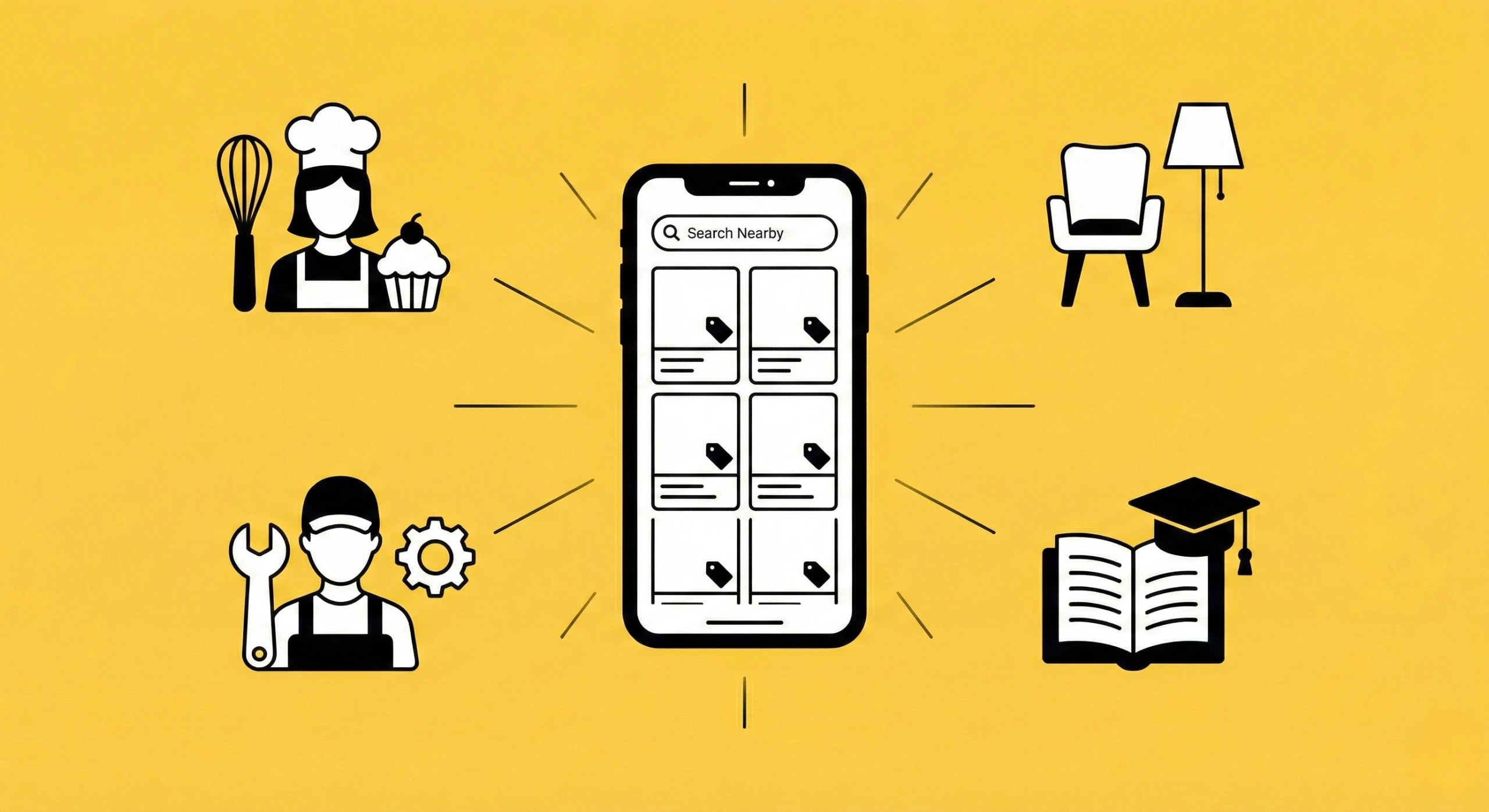
Your item immediately appears to buyers searching in your city. Not to everyone everywhere, which sounds better than it is. Just to people who could realistically meet you this week.
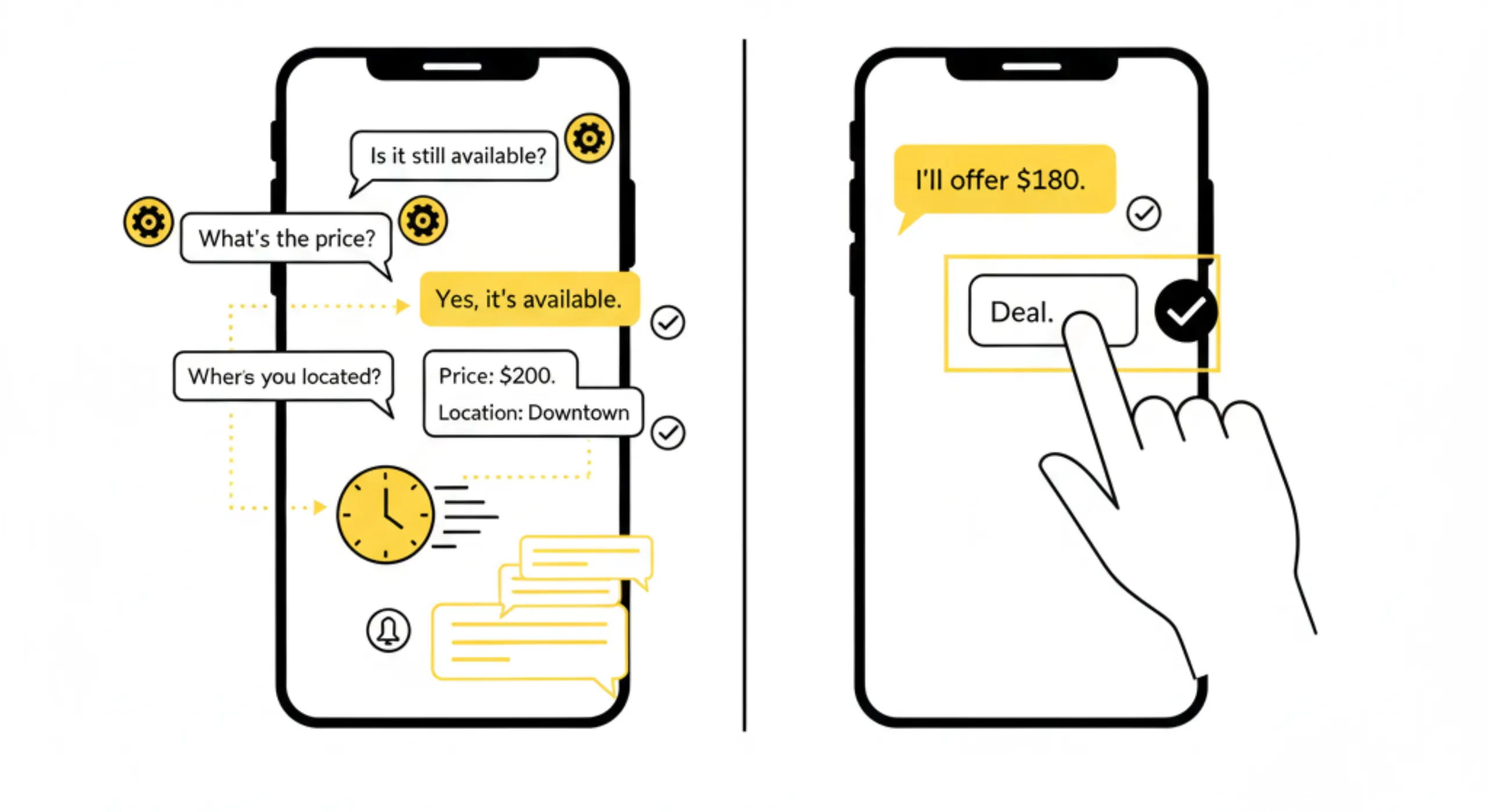
When someone interested messages you, you see their location. If they’re nearby, you know this is a serious inquiry. You respond, suggest a public meeting spot, agree on a time, and that’s the coordination done.
You meet. They inspect the item. If they like it, they pay you, take it, and leave. If they don’t, everyone moves on without hard feelings. Either way, you have your answer within one meeting instead of drawn-out digital back-and-forth.
No commission fees. No platform taking a cut. The price you set is the money you receive. The price they pay is what you get.
What Makes Listings Actually Sell
Some people list items and sell them within hours. Others list similar items and hear nothing for weeks.
The difference comes down to four specific things.
First, photos. Not professional photos, but clear ones. Natural lighting, multiple angles, actual representation of condition. If there’s a scratch, photograph it. Buyers appreciate knowing what they’re getting. Deceptive photos only waste everyone’s time when reality doesn’t match expectations.
Second, pricing. Check what similar items have sold for recently, not what people are asking. List yours competitively. If you want it gone fast, price slightly below market. If you can afford to wait, price at market rate. Overpricing kills interest before conversations even start.
Third, descriptions. Be specific but concise. “iPhone 13, 256GB, blue, battery health 89%, small scratch on camera lens, includes charger and case” tells buyers everything relevant. You don’t need paragraphs.
Fourth, responsiveness. When messages come in, reply quickly. Someone interested today might buy from someone else tomorrow. Every delayed response increases the chance they find an alternative.
Do these four things right, and your success rate jumps dramatically. Ignore them, and you’ll wonder why nobody’s interested in something that should sell easily.
Who Gets The Most Value From This
Sympl serves anyone who’s ever needed to convert unused items into money or buy something without paying full retail.
Students moving cities or setting up their first independent space operate on constrained budgets. Every rupee matters. Buying functional furniture, electronics, and appliances at used prices makes tight budgets stretch further. Selling items before relocating recovers funds and eliminates moving hassles.
Families cycling through kids’ items, upgrading appliances, or replacing worn furniture accumulate sellable goods constantly. These items still work perfectly. They just don’t fit current needs. Converting them back to cash makes sense, but only if the process isn’t a pain.
Working professionals who upgrade devices regularly usually accept terrible trade-in values because direct selling seems complicated. When it becomes genuinely simple, keeping an extra few thousand rupees suddenly makes sense.
First-time sellers who’ve never listed anything online need platforms that don’t assume existing knowledge. If you have to Google how to use a marketplace, it’s already too complicated.
Anyone who’s attempted selling before and quit in frustration knows exactly what problem Sympl solves. The problem wasn’t lack of buyers. It was platforms that made simple transactions unreasonably difficult.
The Economic Logic Nobody Mentions
Here’s something interesting about local used goods markets.
Every item sold locally represents money staying in your community. The student who buys your old desk has more budget left for other needs. The family that sells their washing machine can afford a better replacement. The professional who unloads last year’s phone recovers value that otherwise evaporates.
This money circulates. It doesn’t disappear into corporate accounts in distant cities. It changes hands between neighbors, funding real needs, solving immediate problems.
On the environmental side, every transaction that extends an item’s useful life is one less new item manufactured. Manufacturing, packaging, and shipping all consume resources. Reuse reduces that consumption in aggregate.
These benefits are secondary to the primary purpose of making transactions easier, but they’re real. The most practical solution often happens to be the most sensible one broadly.
What Launching Means Practically
When Sympl goes live, it launches everywhere simultaneously. Every city, every user, all at once. No gradual rollout, no exclusive access periods, no waiting for availability.
If you’ve been mentally listing items you should sell but haven’t gotten around to it, launch day is when excuses run out. The platform that was supposed to exist already will actually exist.
If you’re actively searching for specific items, you’ll suddenly have access to local sellers who previously couldn’t be bothered with complicated listing processes on other platforms.
The first transaction tells you everything you need to know. You’ll immediately notice the difference between friction and flow. Between platforms designed for platform goals and platforms designed for user goals.
Why This Actually Matters
Most marketplace platforms succeed by getting big. More users, more listings, more data, more engagement metrics. Their success doesn’t necessarily correlate with your success.
You don’t need more listings scattered across India. You need the right listing within reach. You don’t need complex algorithms recommending items. You need simple ways to find what’s actually available nearby.
Sympl aligns platform success with user success. Completed transactions benefit everyone. Failed transactions waste everyone’s time. So the entire design focuses on increasing completion rates by removing obstacles.
This alignment changes how features get prioritized. Every addition gets evaluated by one question: does this help transactions complete faster? If not, it doesn’t get added.
Bottom Line
You have items worth selling. Someone nearby needs those exact items. The only thing preventing that transaction from happening is the platform between you.
Sympl removes the friction that’s been making simple exchanges complicated. It connects local buyers with local sellers quickly, directly, and without unnecessary steps.
When it launches, you’ll see how much easier this can be. Until then, just know that the stuff sitting unused in your home has value, and soon, recovering that value will finally be as straightforward as it always should have been.
That’s Sympl. Local selling and buying that actually works.