Most enterprise software projects fail not because the technology is wrong, but because the business case was never properly understood. The decision to build, replace, or modernise a system often starts in a boardroom with genuine business needs: reduce costs, improve customer experience, enter new markets, or comply with changing regulations. Yet somewhere between that initial conversation and the actual delivery, the discussion shifts almost entirely to technical architecture, frameworks, and tooling. The business outcome gets lost.
This happens because technology vendors and internal teams naturally focus on what they know best: the technical solution. But for C-suite leaders making capital allocation decisions, the question is not whether the technology works. The question is whether it delivers the business result on time, within budget, and without destroying operational stability in the process.
The Real Cost of Getting This Wrong
When enterprise software is treated primarily as a technical decision, several predictable problems emerge. Budgets expand as technical teams discover “necessary” additions that were not in the original scope. Timelines extend because technical complexity was underestimated or because integration challenges were not properly assessed. And most damaging of all, the final delivered system does not quite solve the business problem it was supposed to address, because the business context was not kept front and centre throughout the build.
Large enterprises are particularly vulnerable to this drift. In a mid-sized company, the CEO or COO often stays close enough to major projects to intervene when things go off track. But in large organisations with thousands of employees and complex approval structures, software projects can take on a life of their own. Technical teams make reasonable-sounding decisions in isolation, each one logical on its own terms, but cumulatively they move the project away from the original business intent.
The result is a pattern most boards have seen before. A project that was supposed to take 12 months is still running after 24. A system that was meant to reduce operational costs by consolidating platforms has instead added another layer of complexity. A digital transformation initiative that promised competitive advantage has delivered a technically sophisticated system that the business struggles to use effectively.
What Business-First Actually Means in Practice
Treating enterprise software as a business decision first does not mean ignoring technical quality or taking shortcuts. It means anchoring every technical choice to a clear business outcome and maintaining that discipline throughout delivery.
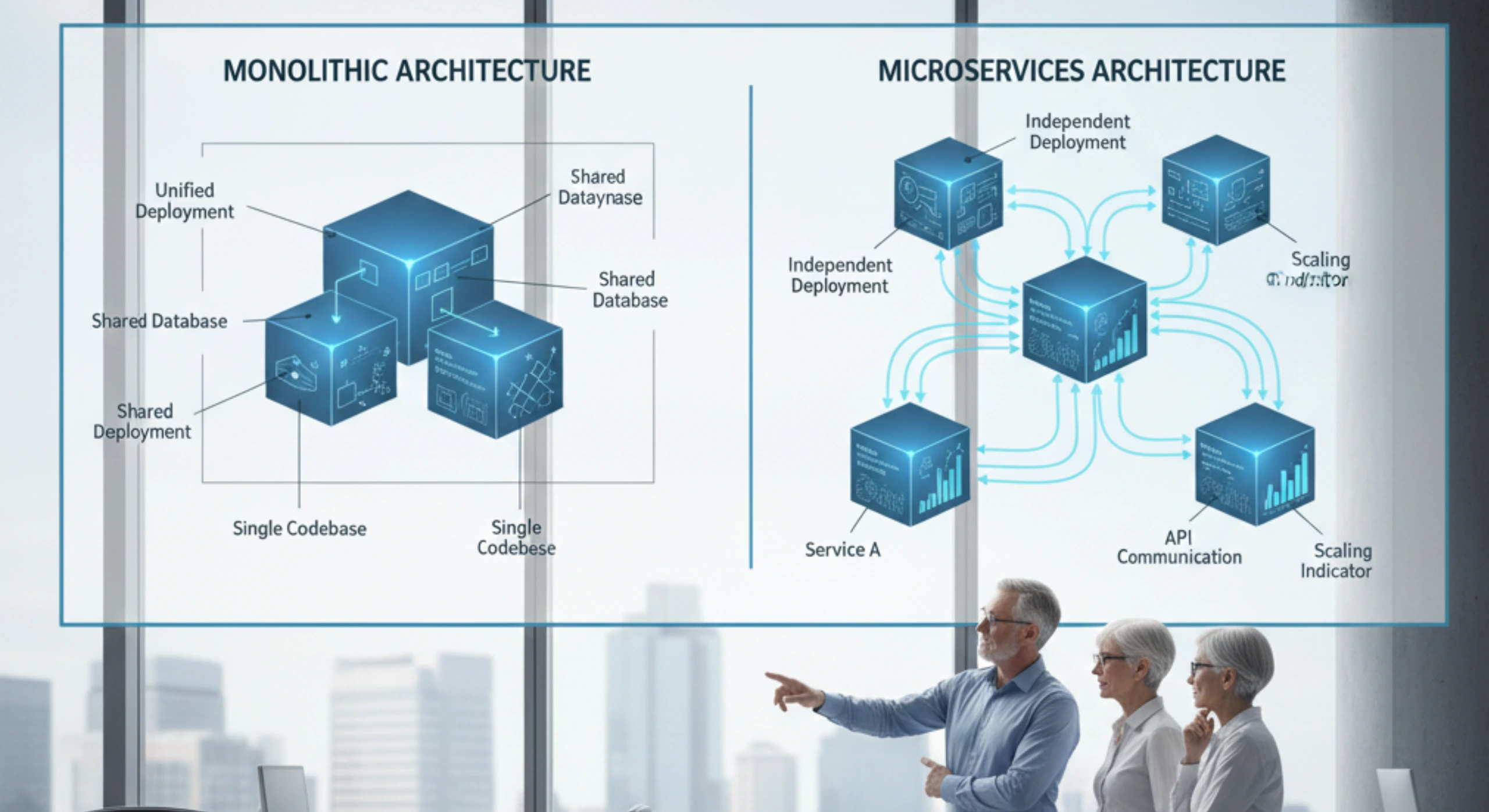
At the start, this means defining success in business terms. Not “we will migrate to a microservices architecture” but “we will reduce the time to launch new products from six months to six weeks.” Not “we will implement an AI-powered analytics platform” but “we will give regional managers real-time visibility into inventory levels so they can reduce stock-outs by 30 percent.”
During delivery, it means continuously checking whether technical decisions support or undermine the business case. If a proposed technical approach will add four months to the timeline, the question is not whether it is technically superior. The question is whether the business benefit of that approach justifies the delay and additional cost. Often it does not.
This requires senior technical leadership that understands both domains. It requires architects and delivery leads who can translate between business language and technical language, and who have the judgment to know when technical perfection is worth pursuing and when it is a distraction from the actual goal.
Why Scale Changes Everything
In smaller software projects, the gap between business intent and technical delivery can be managed informally. A project manager can keep everyone aligned through regular conversations. But at enterprise scale, with programs that might involve hundreds of people across multiple geographies and business units, informal alignment breaks down.
Large enterprises are also dealing with legacy systems that have been built up over decades. Any new software must integrate with these existing systems, respect established data governance rules, and work within complex security and compliance frameworks. These are not just technical constraints. They are business constraints that reflect years of operational decisions, regulatory requirements, and risk management practices.
The complexity of large-scale delivery also means that business priorities can shift during a multi-year program. A competitor launches a new service. Regulations change. A merger or acquisition alters the strategic landscape. The original business case may no longer be the right one six months into delivery. If the program is being run as a purely technical exercise, it will keep building toward the original specification even as the business context has moved on.
How Ozrit Approaches Enterprise Programs Differently
Ozrit was built specifically to address these enterprise delivery challenges. The company operates as a senior-led technology partner for large programs where execution certainty matters more than theoretical capability.
From the first conversation, Ozrit’s approach centres on business outcomes rather than technical proposals. Senior team members lead the initial discovery work directly. They work with C-suite leaders and business unit heads to understand not just what system needs to be built, but why it needs to be built and what success looks like from a business perspective. This is not a sales exercise. It is a structured process to ensure that the technical program is designed around the actual business need.
Once a program begins, Ozrit maintains senior involvement throughout delivery. This is different from the typical consulting model where senior people win the work and then hand execution to junior teams. Ozrit’s delivery model keeps experienced leaders accountable for both technical quality and business outcomes. They make the judgment calls when technical and business priorities appear to conflict. They spot when scope is drifting away from the original business case. And they have the authority to course-correct quickly without escalating every decision through multiple approval layers.
The company also invests heavily in onboarding. New team members joining an Ozrit program go through a structured introduction to both the technical architecture and the business context. They understand what the business is trying to achieve, why certain technical decisions were made, and what constraints are non-negotiable. This reduces the risk that well-meaning engineers make technically sound decisions that undermine business goals.
Ozrit operates with realistic timelines from the start. Rather than promising aggressive schedules that will inevitably slip, the company provides delivery plans based on actual enterprise complexity. This includes time for proper integration testing, security reviews, user acceptance testing, and change management. It also includes buffer for the unexpected issues that always emerge in large-scale delivery. For C-suite leaders, this approach provides something valuable: predictability.
The company maintains 24/7 support capability, which matters for global enterprises that cannot afford extended downtime during deployments or post-launch stabilisation. This is not outsourced support. It is provided by technical teams who understand the full system architecture and business context.
The Strategic Advantage of Getting This Right
When enterprise software is approached as a business decision first, the strategic benefits extend beyond individual project success. It changes how technology investments are evaluated and prioritised. Instead of competing technical initiatives each making isolated cases for funding, business leaders can assess proposals based on clear business impact and realistic delivery confidence.
It also improves how enterprises work with technology partners. Rather than adversarial relationships where vendors try to expand scope and enterprises try to control costs, there is alignment around business outcomes. Both sides succeed when the business goal is achieved.
For boards and C-suite leaders, this approach provides better visibility and control. Technology programs stop being black boxes that occasionally surface budget requests or delay announcements. They become business initiatives that happen to involve significant technology components, managed with the same rigour and outcome-focus as any other major investment.
A Final Thought for Enterprise Leaders
The most successful enterprise software programs are the ones where technical excellence serves business clarity, not the other way around. This requires discipline, senior leadership that can operate across both domains, and partners who understand that their job is not to build impressive technology but to deliver business results reliably.
The technical decisions still matter enormously. Architecture, security, scalability, and code quality are not optional. But they are means to an end, not the end itself. When this distinction is maintained throughout delivery, enterprise software becomes what it should be: a lever for business performance, delivered with the predictability and professionalism that large organisations require.